Essential Oil Diffusion: Which Method is Best? A Comparison of Diffuser Tools
The use of essential oils for aromatherapy has a long history. Nowadays, people increasingly enjoy using fragrances to create an atmosphere during relaxation, thereby soothing their mood. This article will explore which diffusion method is the most effective.
The Evolution of Essential Oil Diffusers
The history of aromatic living can be traced back to ancient times, when royalty and nobility indulged in luxurious sensory experiences—for instance, reveling in a sea of rose petals. For example, the painting *The Roses of Heliogabalus* depicts the Roman Emperor Heliogabalus feasting with nobles amidst an overwhelming cascade of rose blossoms.
 However, fresh rose petals are not available year-round. This prompted people to extract aromatic compounds from plants to create essential oils, which are then diffused using various methods and tools. For example, the earliest form of diffusion involved using candlesticks, and by 30 BCE, the first scented candles had already appeared.
In the mid-19th century, it was discovered that the active components in pure essential oils significantly degrade under high temperatures and combustion. This led to the development of reed diffusers, which utilize capillary action within reeds to absorb and slowly evaporate the essential oils, thereby preserving their bioactive molecules.
In the 20th century, electric heating diffusers emerged to enhance the efficiency and speed of diffusion.
Later, ultrasonic vibration technology gained widespread application, enabling diffusion through the atomization of water.
Comparison of Different Diffuser Tools: Advantages and Disadvantages
1. Candle Holders and Scented Candles
Disadvantage: They pose a fire hazard and may compromise the efficacy of essential oils.
These methods rely on open flames for heating or direct combustion to release fragrances. Although they are still commonly used in spas to create ambiance, the high temperatures can alter the chemical structure of essential oils, degrade their active components, and reduce their therapeutic effects. Additionally, the use of open flames inherently carries safety risks
2. Reed Diffusers
Disadvantage: Limited diffusion range and susceptibility to oil oxidation.
In ancient times, reeds were used as diffusion tools to preserve the bioactive molecules in essential oils. This method gained widespread popularity, with reeds often placed in homes or reception areas, serving both as a source of fragrance and as decorative elements.
However, reed diffusers have notable limitations: their fragrance diffusion is relatively weak, and precious essential oils evaporate quite rapidly. Additionally, the essential oils in reed bottles remain continuously exposed to air, leading to significant wastage and rapid oxidation. Most commercially available reed diffusers also utilize perfume technology with alcohol as a carrier, which further alters the pure characteristics of the essential oils.

3. Electric Heat Diffusers
Disadvantage: Risk of oil contamination and suboptimal diffusion performance.
To achieve faster fragrance diffusion, people began using electric heating methods, such as aromatherapy lamps. These devices rapidly evaporate aromatic compounds while also providing illumination. Many users employ them as nightlights during sleep, essentially functioning as lighting fixtures with added aromatherapy benefits.
However, this method exposes essential oils directly to the air, making them susceptible to contamination and degradation. Furthermore, the heating process cannot guarantee ideal diffusion conditions, which may compromise the therapeutic efficacy of the essential oils.

4. Ultrasonic Aromatherapy Diffusers
Disadvantage: Reliance on water as a carrier, resulting in reduced diffusion efficiency.
As lifestyles evolved, the demand for more advanced tools grew, leading to the development of ultrasonic aromatherapy diffusers that apply ultrasonic technology to essential oil diffusion. These devices mix water with essential oils and use high-frequency vibrations to produce a fine mist for inhalation.
However, this method relies on larger water molecules to disperse aromatic compounds into the air, failing to fully utilize the inherent properties of the smaller molecules in essential oils. Consequently, diffusion efficiency remains considerably limited.
 In addition to the diffusion methods mentioned above, a more balanced approach now exists that maximizes the preservation of essential oil molecular integrity while avoiding adverse effects—namely, dual-fluid atomization diffusion.
Dual-Fluid Atomization Diffuser (Room-Temperature Mist Type)
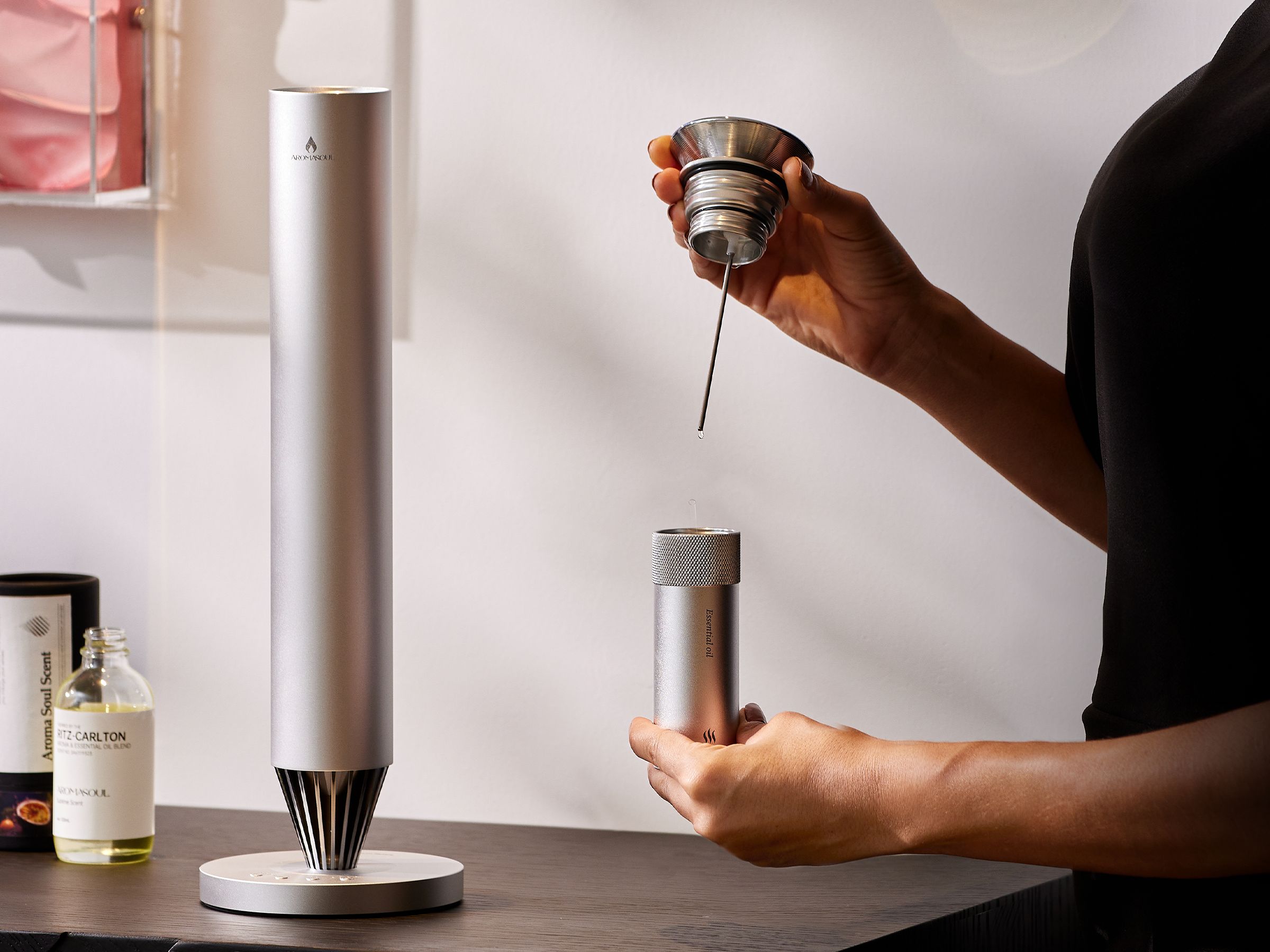
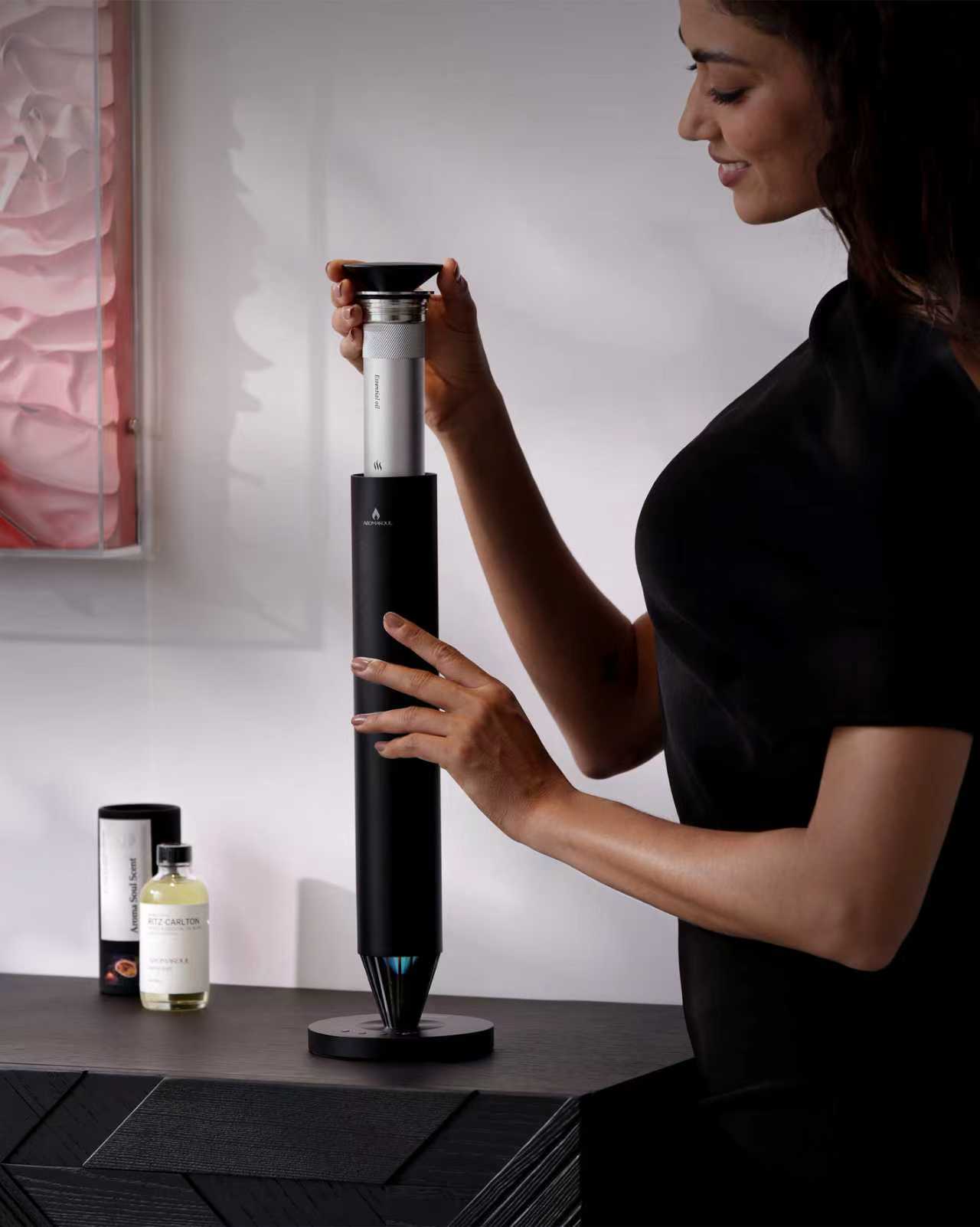
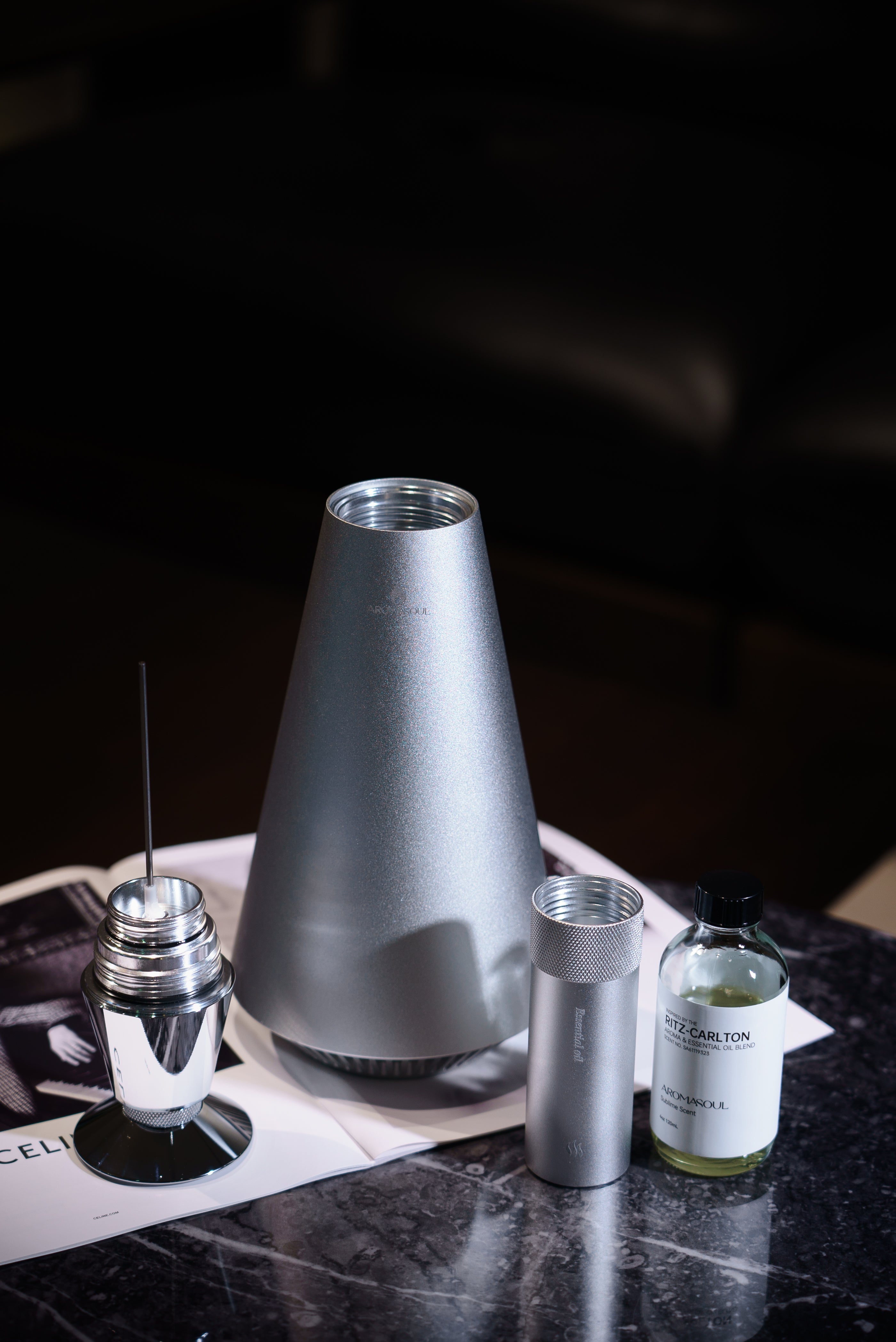
This system utilizes an air pump to compress air, generating a high-speed airflow that atomizes essential oils into nanometer-sized particles for diffusion. The entire process requires only pure essential oils—no water is needed—and it operates immediately upon being powered on.
The nanoscale fine particles produced by the atomization core disperse rapidly and uniformly across large areas, much like a gas, ensuring an even distribution of fragrance without moisture accumulation.
Compared to traditional aerosol particles, these nanoparticles weigh approximately one millionth as much. They take about 14 hours to settle from a height of 180 centimeters, allowing the fragrance to linger persistently in the space.

Dual-Fluid Atomization Diffuser (Room Temperature Type)
The design of this aromatherapy device prioritizes functionality: it does not provide humidification or moisturizing features but instead ensures optimal fragrance quality while eliminating any odors during the diffusion process.
It is typically equipped with multi-level adjustment functions, allowing intelligent control over fragrance concentration, spray frequency, and operation time. With these advanced features, it has become the preferred choice for commercial fragrance systems in hotels, shopping malls, sales offices, clubs, and similar venues.